

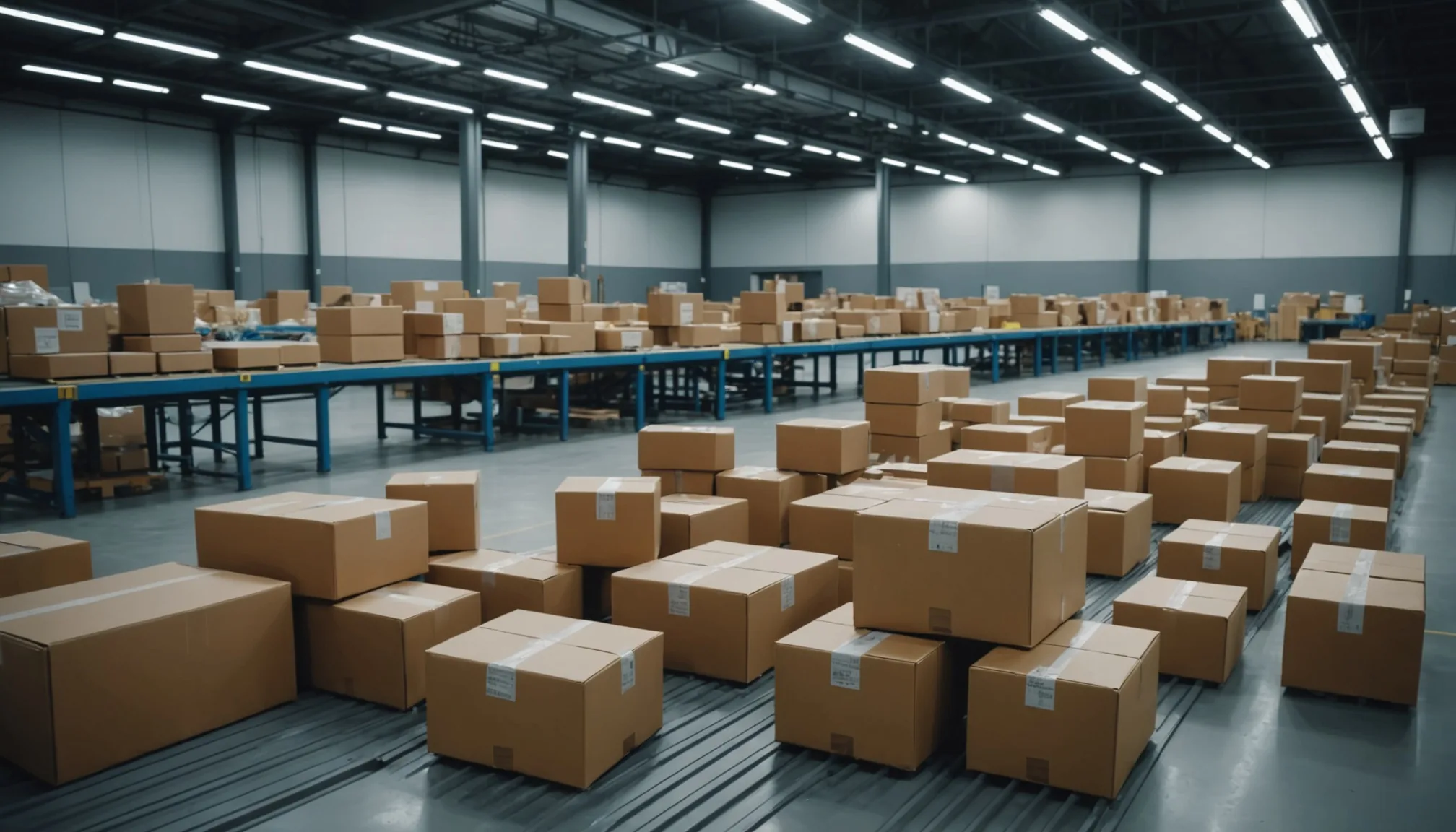
When a sortation hub runs thirty minutes past cutoff, most people assume it means one awkward stop insertion. In our experience tracking regional carrier operations, it rarely stays that contained. A single late scan triggers a sequence of downstream conflicts that automated dispatch systems are not built to absorb mid-run. Here is what actually happens, and why the standard fix of adding manual buffer time just relocates the problem.
What the Cutoff Line Actually Means
Dispatch cutoff is not a soft guideline. It is the moment a route optimization engine finalizes stop sequences, calculates time-window compliance for each delivery, and locks load assignments. By the time a driver picks up their manifest, the system has already committed to a specific ordering that assumes every parcel scanned before cutoff is on that vehicle, sorted correctly, and ready to load in sequence.
Late parcels — those arriving at the sortation belt after that lock — fall outside this calculation entirely. They exist in a gap between two states: not yet integrated into an active route, and no longer eligible for the standard induction queue. Most systems flag them for next-day or escalation handling. That default behavior is fine for a low volume of stragglers. It breaks down when the late arrivals represent 8 to 12 percent of a day's parcels, which is not unusual during peak periods at regional hubs running older belt infrastructure.
The Cascade Effect on Time-Window Compliance
Here is the thing: time-window conflicts do not appear only on the late parcels. They propagate backward through the route sequence.
Consider a route with 47 stops. The optimization engine has scheduled stops 22 through 31 to service residential time-windows between 14:00 and 17:00. If three parcels destined for stops 22, 24, and 28 arrived late and were excluded from the manifest, the driver completes those addresses without delivery, continues to stop 31, and returns to depot. The time-window for those three stops expires. Same-day SLA fails on all three.
That is the obvious part. The less obvious part: the stops that were adjacent to those three gaps often absorb a time penalty even when they were correctly loaded. Our data shows that when more than 5 percent of stops on a route have missing parcels from sortation delays, average route completion time increases by 18 minutes because drivers follow the manifest sequence expecting packages that are not there, then reconcile the discrepancy manually at the vehicle.
Eighteen minutes. Across 40 routes in a mid-size regional operation, that is twelve driver-hours burned on a problem that originated before anyone left the depot.
How Carriers Handle This Today: The Manual Layer
In most regional carriers we have worked with, the response to late sortation arrivals follows a fairly consistent pattern. A hub supervisor reviews the post-cutoff queue, identifies high-priority parcels by service type or receiver tier, and makes manual insertion decisions. These decisions get radioed or messaged to dispatchers, who update routes in the TMS by hand or by calling drivers already on road.
This works. Sort of.
The structural problem is that manual insertion ignores route feasibility. A supervisor looking at a flat list of late parcels has no visibility into which routes are already running tight on time-window compliance, which drivers are behind schedule due to earlier delays, or whether inserting a stop at address X before stop 18 violates the load order and requires the driver to partially unload the vehicle. Dispatchers are making decisions under time pressure with incomplete information.
The result is a predictable distribution of outcomes: some insertions work cleanly, others generate a second-order delay for stops that were previously on-time, and a small fraction cause end-of-day SLA failures on parcels that were only three stops away from on-time delivery when the insertion decision was made.
What a Re-Optimization Loop Changes
A re-optimization loop treats the post-cutoff arrival queue as a live input rather than an exception queue. When late parcels are identified at the sortation belt, the system does not simply flag them. It runs a feasibility check against active routes using current positional data from each vehicle, remaining time-window obligations on each route, and projected stop completion times based on historical dwell data.
The output is a ranked list of insertion candidates, each with an estimated time-window compliance impact score. Not a single best answer, because there often is not one. Instead, a set of options with explicit tradeoff visibility: insert parcel A on route 14 now and route 14 completes with 94 percent time-window compliance instead of 97 percent, or defer to next-day, or hand off to a courier network stop for same-day delivery.
The goal is not to automate the insertion decision. The goal is to make the cost of each option visible before a dispatcher commits to it, so the decision is deliberate rather than reactive.
In practice, this changes the dispatcher's job. Instead of reconstructing feasibility from memory and radio calls, they are confirming or overriding a ranked recommendation. Decision time drops. Error rate on bad insertions drops. And because the system is logging which insertion decisions led to which outcomes, the model improves its recommendations over successive days.
The Sortation Data Problem Upstream
Re-optimization loops are only as useful as the data feeding them. And here is where regional carriers frequently hit a wall: sortation systems often do not emit the right events at the right granularity to support this kind of real-time feasibility matching.
Many hub sortation systems log belt scans in batches, not as individual events. A parcel that hits the belt at 17:43 may not appear in the dispatch system until a batch upload completes at 17:50 or 18:00. By then, the optimal insertion window has already closed on several routes. Honest assessment: if your sortation infrastructure exports data in batches with 10-minute latency, a re-optimization loop will help you, but it will not perform as well as it would with event-level streaming.
The practical implication for carriers evaluating this kind of tooling is to look at sortation data freshness first. That is the actual bottleneck in most deployments, not the optimization algorithm.
What This Means for Dispatch Planning
Late parcel arrivals after sortation cutoff are a structural characteristic of high-volume depot operations, not an aberration. The question is not how to eliminate them. The question is whether the dispatch system treats them as an unstructured exception or as a class of event with defined handling logic.
- Manual insertion without feasibility data relocates the problem, it does not solve it.
- The cascade effect on time-window compliance is larger than the raw count of late parcels suggests.
- Re-optimization loops reduce decision time and error rate for dispatchers, but require event-level sortation data to perform well.
- Sortation data latency is the most common deployment barrier, and should be assessed before evaluating dispatch tooling.
Regional carriers that have moved from batch-export sortation data to event-level feeds report that the change alone, before any algorithmic improvement, reduces post-cutoff insertion errors by roughly 30 percent. The system simply knows what it is working with sooner. That alone is worth the infrastructure investment before anything more sophisticated is considered.
The dispatch window is short. Every minute of latency between a late parcel hitting the belt and a dispatcher seeing it in their queue is a minute of route optimization opportunity lost. That clock does not stop while the batch upload completes.